
Pâte à Choux 101
The Foundation of Cream Puffs, Éclairs, and Beyond

Pâte à choux is one of those core pastry techniques that looks deceptively simple—but mastering it teaches you more about dough, structure, and moisture than almost any other recipe.
I learned this method during my time in professional kitchens and formal training at The Culinary Institute of America, where choux was treated not as a recipe to memorize, but as a system to understand. Once you understand the why, choux becomes incredibly forgiving, and endlessly versatile.
Before we get into the method, let’s start with the most important part.
The Choux Ratio (Memorize This)
2 liquid : 1 butter : 1 flour : 2 egg (by weight)
This ratio is the backbone of classic pâte à choux. If you remember nothing else, remember this. It allows you to scale the recipe up or down confidently and helps you troubleshoot when something feels off.
The Standard Formula I Use
This is the classic recipe I was taught in school and still rely on today:
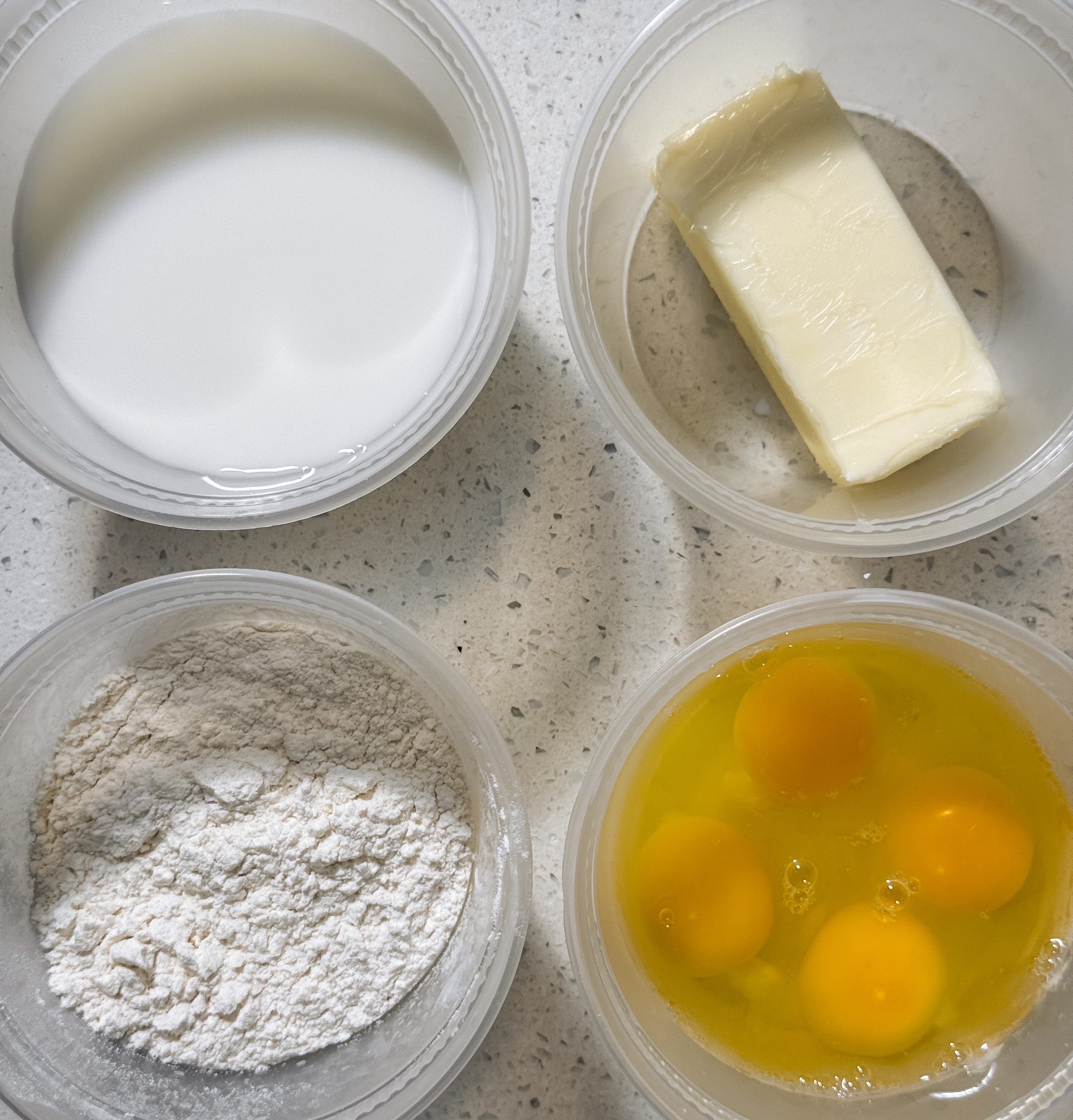
4 oz milk
4 oz water
4 oz unsalted butter
4 oz all-purpose flour
8 oz eggs, beaten (about 5 large eggs)
You can use all milk or all water, but this half-and-half version is the traditional balance we were taught. Milk gives richness and color; water encourages a stronger rise. Together, they give you structure and tenderness.
Method: How Choux Actually Comes Together
1. Boil the liquid and butter
Combine the milk, water, butter, and a pinch of salt in a saucepan. Bring it to a full boil, not a simmer. This ensures the butter is fully melted and the liquid is hot enough to properly gelatinize the flour.
2. Add the flour off heat
Remove the pan from the heat and add the flour all at once. Stir immediately with a spatula until the mixture absorbs all the liquid and forms a cohesive dough.
3. Cook the panade
Return the pan to medium heat and cook the dough, stirring constantly, until a thin film forms on the bottom of the pot.
This step dries out excess moisture and is essential for proper rise. Under-cooked dough leads to flat or dense choux.
4. Cool before adding eggs
Transfer the dough to a stand mixer fitted with a paddle attachment. Mix on low speed until the bowl is just barely warm to the touch.
If the dough is too hot, it will scramble your eggs. Temperature control matters here.
5. Add eggs gradually
Add the beaten eggs to the dough one quarter at a time, fully incorporating each addition before adding the next. Slow down on the final addition to ensure you get the perfect consistency.
You may not need all the egg. This is where choux stops being a recipe and starts being a skill.
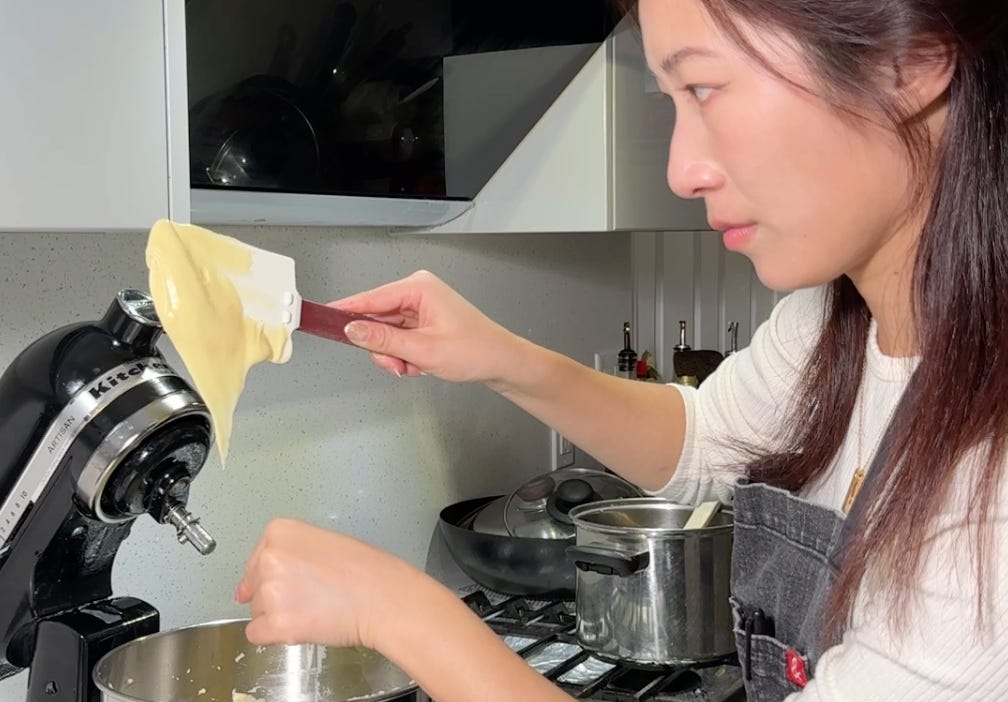
Your dough is ready when:
It falls from the spatula in a smooth V shape, or
A finger dipped into the dough forms a soft, relaxed peak
If it’s too stiff, it won’t rise. Too loose, and it won’t hold its shape.
Piping and Baking
Transfer the finished dough to a piping bag and pipe into your desired shapes: rounds for cream puffs, logs for éclairs, or rings for Paris-Brest.
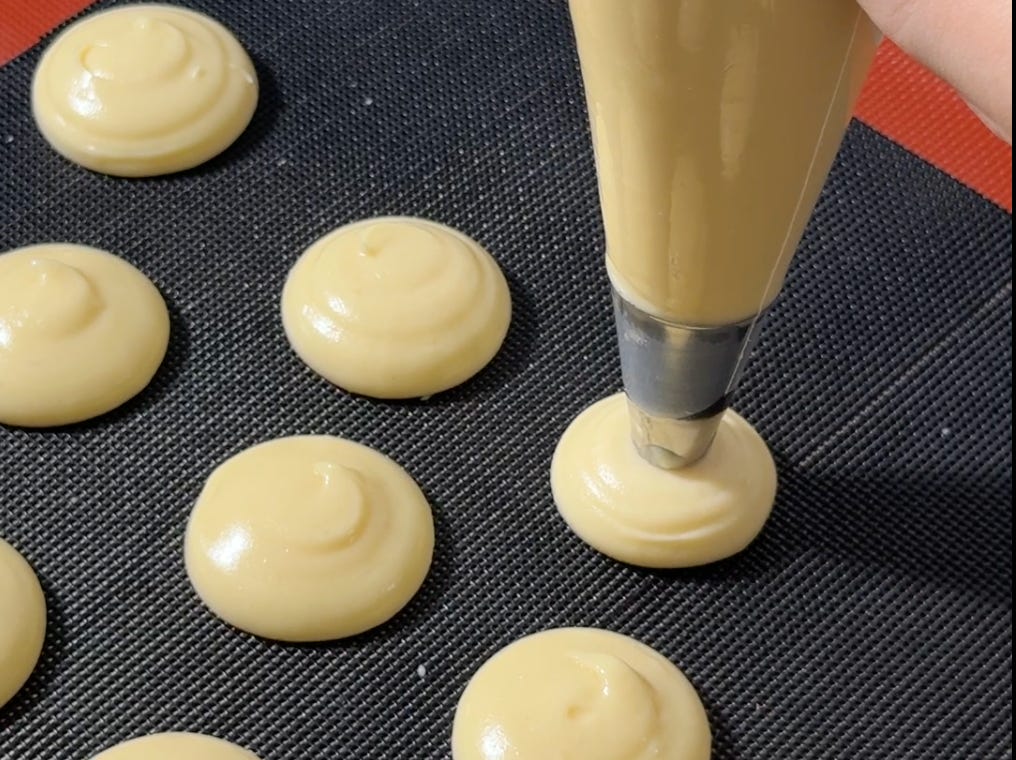
Pro chef tip: bake on a perforated silicone mat for even heat circulation and optimal rise.
If you want extra texture and a professional finish, top your piped choux with craquelin. I walk through that technique step-by-step in this post.
Bake in a fully preheated 375°F (190°C) oven.
Bake for 30–40 minutes, depending on size
Do not open the oven door during the first 25 minutes (choux relies on steam to rise)
The puffs should be deep golden brown, not pale
Choux isn’t finished when it looks done, it’s finished when it’s dry. If you pull them too early, they’ll collapse as they cool.
How to Know You Did It Right
When baked properly, choux should:
Be deeply golden
Feel light for its size
Be hollow inside with minimal webbing
That hollow interior is what makes choux the perfect vessel for creams, custards, and mousses.
Filling and Finishing
For filling, I often use diplomat cream, pastry cream lightened with whipped cream. To fill, cut a small “X” on the bottom of the puff, insert your piping tip, and fill until the cream just begins to peek out.
Finish with a glaze, fondant, or simply powdered sugar. Choux doesn’t need much. When the technique is right, it speaks for itself.
Hey Jessica, huge fan of your recipes. Can you please share the steps for diplomat cream?
I recently found you on YouTube, and I love your content, I'll try this recipe in this week, thank you so much to share this with us. 😊